Overview
Ohio Revised Code Section 105.91 sets forth our purpose:
- To study the co-ordination of the work of the several courts of Ohio,
- To encourage uniformity in the application of the law, rules, and practice throughout the state and within each division of the courts as an integral part of the judicial system of the state;
- To promote an exchange of experience and suggestions respecting the operation of the judicial system; and
- To consider the business and problems pertaining to the administration of justice and to make recommendations for its improvement.
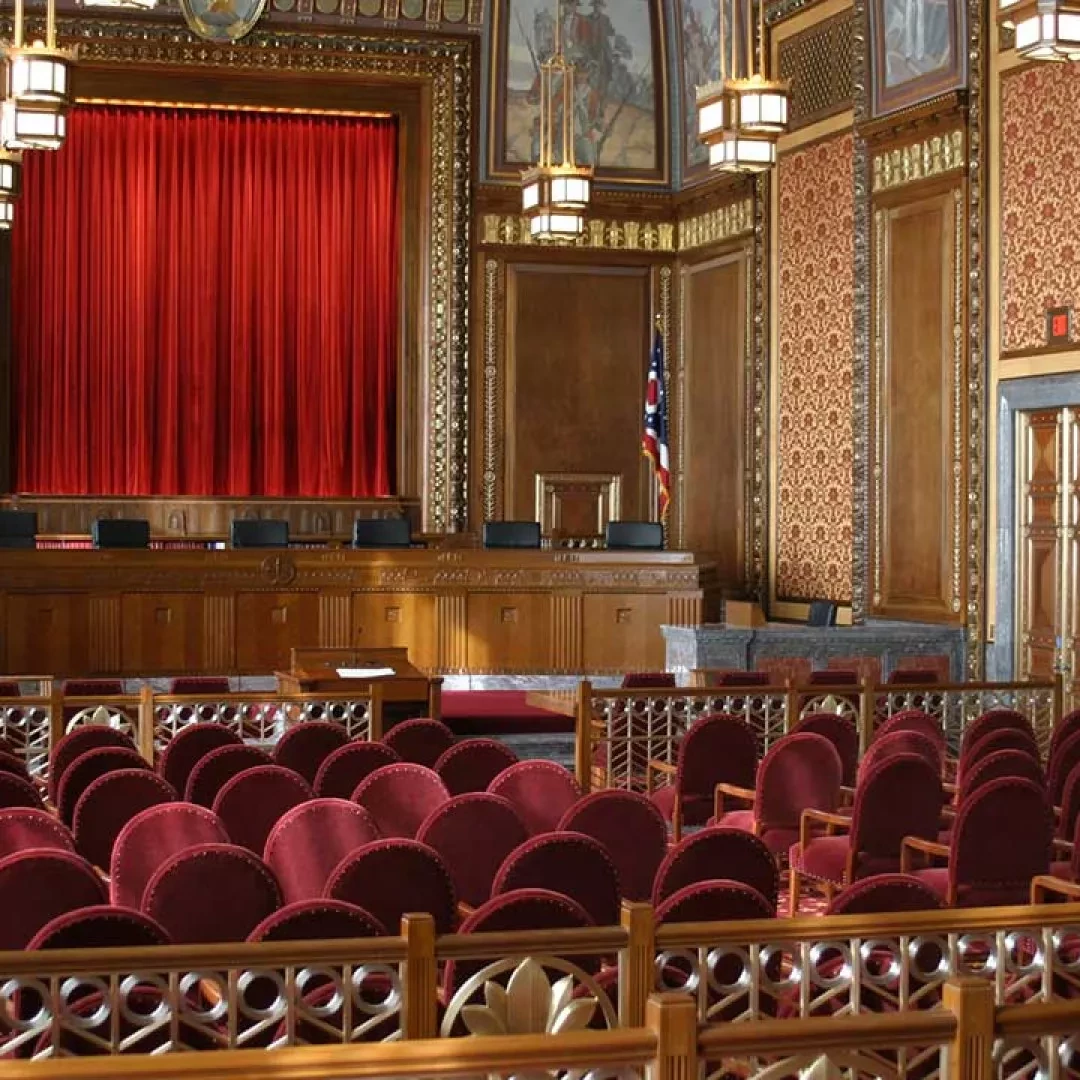
Formation
In 1958, Judge Robert L. McBride circulated a report entitled Judicial Organization and the Bar. This report pointed out the need for a state-wide judicial organization consisting of all Ohio judges. Three reasons for a "judicial conference" were set forth:
- The then-existing judges' organizations were organized along jurisdictional lines,
- The judiciary was "submerged" by the organized voice of the bar, and
- There was no single agency in which all judges could participate to improve the administration of justice.
The report suggested that all judges could combine efforts to improve the judiciary from within the judicial branch and by recommending legislative change where needed. Ohio judges met in 1959 and unanimously passed a resolution to organize a Judicial Conference having an Executive Committee consisting of the Chief Justice and two judges from each of the different subject matter jurisdictions. The following year, a second meeting was held, and the judges adopted a constitution.
In May 1963, the General Assembly enacted R.C. 105.91, creating the Ohio Judicial Conference as a statutory entity, separate from the Supreme Court of Ohio, within the judicial branch of government, essentially as it is today. The Judicial Conference consists of all Ohio judges and representatives of the six judicial associations. In October 1994, the General Assembly passed a statute (R.C. 105.911) enabling the Ohio Judicial Conference to research and prepare judicial impact statements on legislation that affects the administration of justice in Ohio.
Chief Justice Kingsley A. Taft, Supreme Court of Ohio, in an address delivered to Ohio judges on May 16, 1963, set forth the challenge for Ohio judges:
I feel certain that, if all of us who are judges will take an affirmative interest and pride in having a Judicial Conference, no matter how slight that affirmative interest and pride may be, those judges who are willing and anxious to devote their time and effort to the activities of a Judicial Conference will be encouraged to do so and the resulting product of their time and effort will not only bring honor and help to all of us as Ohio Judges but will substantially improve the administration of justice in Ohio.
Since 1963 Ohio judges have accepted the challenge and have demonstrated an unwavering commitment to working with other Ohio judges to make improvements in our courts and the administration of justice. More than 200 judges work on Judicial Conference Committees. The Judicial Conference needs every Ohio judge to be involved.
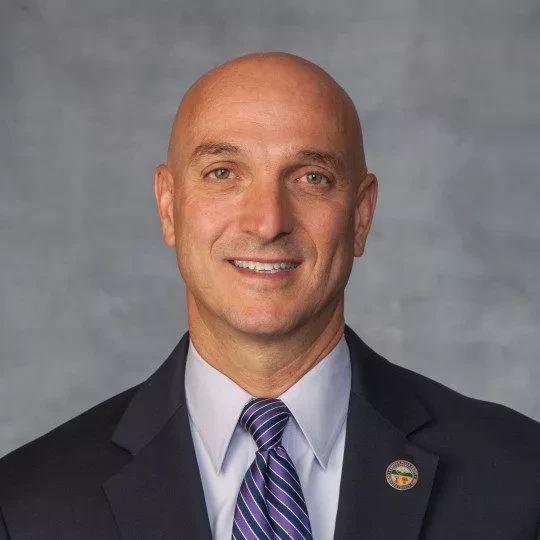
Judge John J. Russo
Ohio Judicial Conference Chair
Cuyahoga Co. Common Pleas Court
Judge John J. Russo has been a judge for the Cuyahoga County Common Pleas Court since 2005. After receiving a Bachelor of Science in Business Administration, he received his Juris Doctor degree at Cleveland State University College of Law. For 12 years prior to taking his position on the Bench, Judge Russo was a civil and criminal litigator in his private practice. During his time on the Bench, the Judge also managed the Veterans Treatment Court Specialty Court docket, and currently oversees a Commercial Cases docket.
While in his nearly 20 years on the Bench, Judge Russo has served in many leadership roles. For 6 years, he served as Common Pleas Administrative and Presiding Judge in Cuyahoga County. He served as president of the National Association for Presiding Judges and Court Executive Officers (NAPCO), a national organization of court chief judges and court executives, and currently serves as NAPCO’s Chair of the Board of Directors. Recently, Judge Russo completed his one-year term as president of the Cleveland Metropolitan Bar Association (CMBA). In addition, he has taught at numerous court conclaves, judges’ conferences, community programs, and continuing legal educations programs.
He has also chaired or participated in numerous justice system boards and committees. Some include: Co-Chair of the Court Administration Committee of the Ohio Judicial Conference; Cleveland State University Law Alumni Association; Board Commission and Past Chair of the Ohio Supreme Court Lawyers Fund For Client Protection; Member of the Public Health, Death Penalty and Bail Bond Reform Task Force (all appointed by the Ohio Chief Justice). In addition, he is an Adjunct Professor at Cleveland State University Law School and Saint Edward High School.
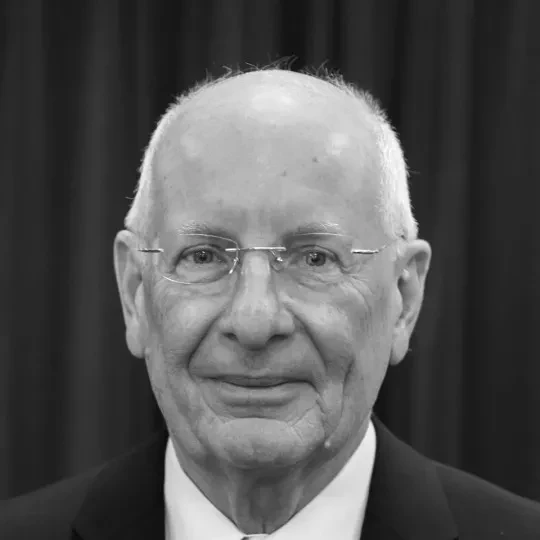
Justice Paul Pfeifer
Ohio Judicial Conference Executive Director
Retired
Retired Justice Paul Pfeifer grew up on his family's dairy farm near Bucyrus and still resides just down the road. His first job after graduating from The Ohio State University School of Law was as an assistant attorney general trying eminent-domain cases associated with the building of Ohio's highway system. Traveling the state gave him an appreciation for Ohio's county courthouses, architectural jewels that are the crossroads of life in our towns and cities.
In 1972, Retired Justice Pfeifer became a partner in the law firm of Cory, Brown & Pfeifer, where he practiced — primarily as a trial and tax lawyer — for 20 years. He also served several years as an assistant county prosecutor. Retired Justice Pfeifer served in both houses of the Ohio General Assembly, including one term in the House of Representatives and four terms in the Senate. He held a variety of leadership posts in the Senate, and served as chair of the Senate Judiciary Committee for 10 years. His proudest legislative accomplishment was crafting the legislation creating the Ohio Tuition Trust Authority.
Retired Justice Pfeifer was first elected to the Supreme Court in 1992. Upon retirement from the Supreme Court, he became the Executive Director of the Ohio Judicial Conference in January of 2017.